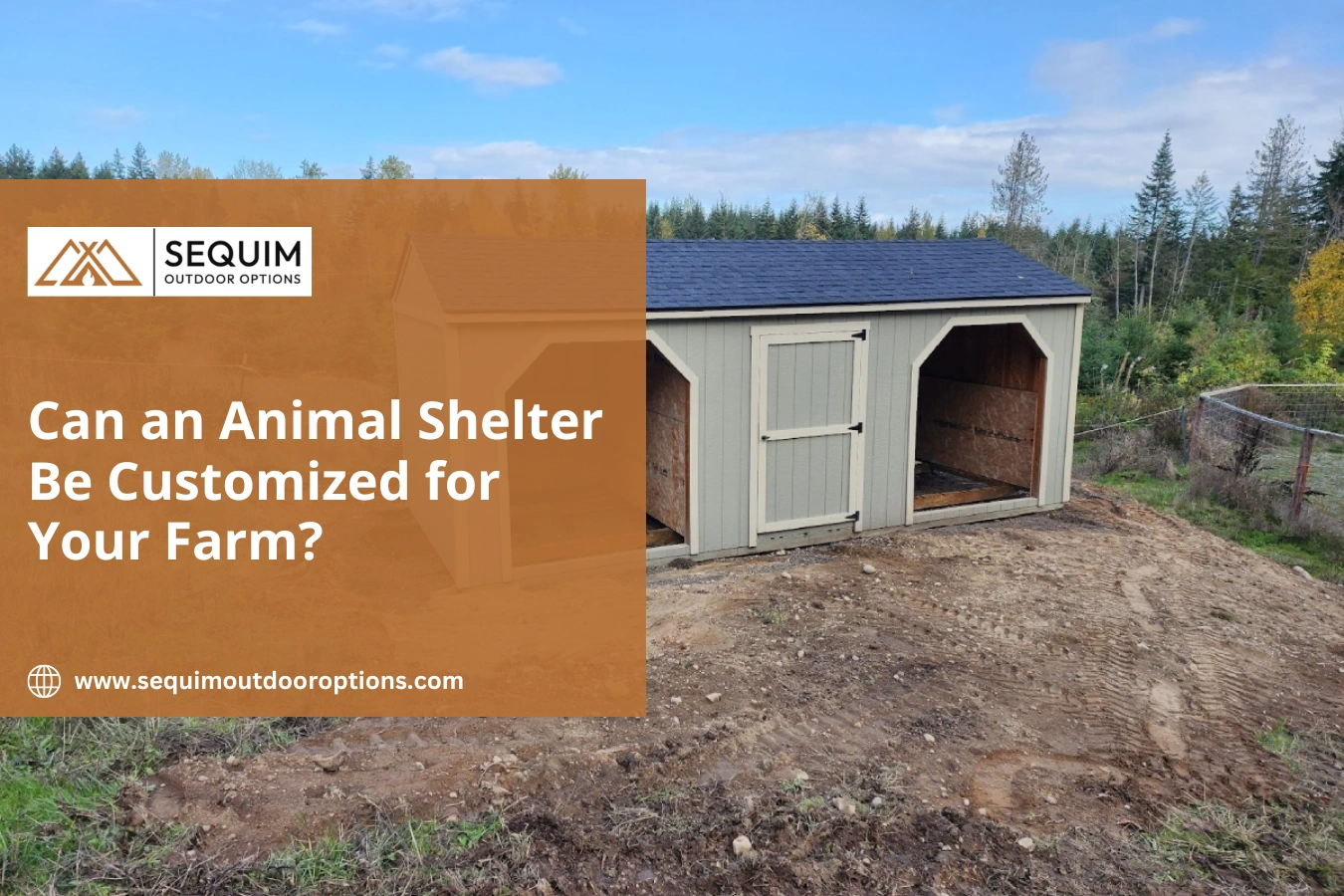
Yes, an animal shelter can be customized to better fit your farm, your animals, and the way you care for them. The best place to start is with your daily routine. Think about where your animals rest, how they move through the property, and what would make feeding and cleaning easier.
Maybe you need a covered resting area near the pasture. Perhaps your current shelter feels crowded, or its opening faces the direction that rain usually comes from. These details can make a big difference in how useful a shelter feels once it is on your property.
At Sequim Outdoor Options, animal shelters offer an open, practical design that supports airflow and weather protection. You can discuss your farm setup with the team and find out which customization options are available for your chosen shelter.
Let’s look at what to consider before planning yours.
Why Customize an Animal Shelter for Your Farm?
No two farms work exactly the same way. Even properties with similar animals can have different layouts, weather exposure, and care routines.
A shelter that works well in one pasture may be awkward in another. The opening could be too close to a fence, the covered space might not fit your group comfortably, or the location could make cleaning harder than it needs to be.
Customization gives you a chance to address these concerns before you order.
It can help you plan for:
- The type and number of animals using the shelter
- Comfortable access in and out
- Protection from the weather on your property
- Space for regular cleaning
- A design that fits your farm’s appearance
- Changes you reasonably expect in the future
The goal is to choose features that have a clear purpose. A shelter does not need to be complicated to work well.
Start With the Animals That Will Use It
Before choosing colors or comparing designs, think about the animals that will spend time under the roof.
Their size, behavior, and daily needs should guide the conversation. A shelter for a few goats will need different planning from one intended for horses.
Consider how your animals use their current space. Do they rest together? Does one animal tend to block an entrance? Do they all seek cover when it rains?
These observations can help you explain what you need more clearly.
Plan for Movement, Not Just Standing Space
It is easy to picture animals standing neatly inside a shelter. Real life usually looks different.
Animals need room to enter, turn, settle down, and leave. The entrance and surrounding area matter just as much as the covered footprint.
Tell the team about your animals and how they behave together. Confirm that the proposed shelter is suitable for their intended use before deciding on a design.
Choose a Size That Fits Your Daily Routine
Size is one of the first things to discuss when planning a custom animal shelter.
Start with your current animals, then think about any realistic changes ahead. If you expect to add animals soon, mention that before choosing a size.
However, more space is only useful if the shelter also fits your property and budget.
Ask yourself:
- Will all the animals need shelter at the same time?
- Is this their main covered resting area?
- Will feeding happen nearby?
- Can I reach the whole space for cleaning?
- Will the shelter fit without creating a narrow passage beside a fence?
Measure the proposed location rather than estimating it by sight. Marking the footprint on the ground can make it easier to picture how the shelter will fit.
Walk around the marked area with the tools you normally use. You may notice an access problem that would be hard to spot in a product photo.
Discuss the Opening and Shelter Layout
The opening affects how animals use the shelter and how easily you can care for the space.
A practical layout should allow comfortable entry and exit while keeping your daily tasks manageable.
Think about where the opening will face. Consider nearby gates, feeding areas, fences, and the paths your animals already use.
Keep Everyday Access Simple
Picture a normal morning on your farm.
You are carrying supplies, checking the animals, and preparing to clean. Can you reach the shelter without crossing an awkward corner or moving equipment out of the way?
Planning around these small tasks can save repeated effort.
If you have ideas about separate areas, partitions, or storage, raise them during the quote process. Ask which features are available and suitable for the shelter model. Confirm the layout before placing your order.
Plan for Weather Protection and Airflow
A custom animal shelter should suit the conditions where it will be used.
Look at what happens on your property during wet or windy weather. Which direction does rain usually come from? Where does water collect? Which areas receive strong afternoon sun?
These details help you plan both the shelter and its placement.
Sequim Outdoor Options’ animal shelters use an open design to provide cover while allowing airflow. When discussing changes, consider how they might affect that balance.
Think Carefully Before Adding More Enclosure
More enclosure may seem like an easy way to improve protection. However, closing off a space also changes how air moves through it.
Explain the weather problem you want to solve rather than starting with a specific modification.
For example, saying, “Rain blows into this corner of the pasture,” gives the team useful context. They can discuss whether a different orientation or an available design option would be a better fit.
Make Cleaning Part of the Design Conversation
A shelter needs to work for the person caring for the animals, too.
Before choosing a layout, picture how you will remove bedding, collect waste, and check the corners. A design that looks convenient when empty may feel much tighter during cleaning.
Consider:
- Access for a wheelbarrow or your usual tools
- Room to move without disturbing resting animals
- Areas where bedding may collect
- The route between the shelter and your disposal area
- Access to inspect surfaces for wear or damage
If you use equipment for cleaning, share its dimensions when discussing the shelter.
Also ask how the ground beneath the shelter should be prepared. Site preparation and drainage deserve attention before delivery, especially if the proposed location becomes muddy after rain.
Choose an Appearance That Fits Your Property
Practical features come first, but appearance still matters. An animal shelter will become part of the view from your home, driveway, or pasture.
A thoughtful color choice can help it sit comfortably alongside your barn, fencing, or other buildings.
Sequim Outdoor Options displays a range of siding and roof colors on its website. Ask which materials and finishes are available for your specific animal shelter.
You might prefer:
- A familiar farm color that complements your barn
- A neutral shade that blends into the landscape
- Trim that matches nearby buildings
- A roof color that creates a consistent look across the property
Confirm the available combinations during the quote process so the final design reflects both your taste and the shelter’s intended use.
Consider Placement Before Finalizing Your Order
Customization works best when the shelter and its location are planned together.
Even a carefully chosen structure can be inconvenient if it sits in a low area, blocks a gate, or leaves too little room around a fence.
Take a walk around your proposed location and look beyond the shelter footprint.
Check:
- How animals will approach and leave
- Where rainwater flows
- Whether nearby gates can open fully
- How you will access the area for maintenance
- Whether the delivery route has tight turns or obstacles
- How close the shelter will be to feeding and water areas
Sequim Outdoor Options offers delivery and installation as part of its building process. Discuss access and site requirements early so you can prepare the location before your shelter arrives.
Which Custom Features Are Worth Paying For?
The most useful custom features solve a problem you will face regularly.
Extra space may be worthwhile if your animals currently crowd into a small covered area. A different available finish may help the shelter match your property. A more suitable layout could make cleaning easier every week.
Start by separating your priorities into three groups:
- Features you need for the shelter to work
- Features that would improve daily use
- Features you would enjoy if the budget allows
This makes the quote conversation more focused.
Ask how each option affects the total price and what is included. Confirm the shelter dimensions, selected features, delivery arrangements, and any preparation you need to handle.
A clear quote helps you decide where your money will make the biggest difference.
What Should You Share When Requesting a Quote?
You do not need a finished design before contacting Sequim Outdoor Options. A few useful details can give the team a strong starting point.
Have this information ready:
- The type and number of animals
- Your preferred shelter size, if known
- Measurements of the proposed location
- Photos of the site and delivery access
- Any problems with your current setup
- Your preferred colors or appearance
- Your approximate budget
- Any plans to add animals in the future
Explain what you want the shelter to help you do.
For example, “I need a covered resting space near the pasture that I can clean with a wheelbarrow,” is a useful starting point. It connects the design to a real task and helps the team discuss suitable options.
Get a Quote for Your Farm’s Animal Shelter
Your farm already has a routine. The right shelter should fit into it and make animal care easier.
Sequim Outdoor Options offers animal shelters for farms, homesteads, and backyard setups, with a focus on practical use, airflow, and protection.
Whether you are adding your first shelter or replacing one that no longer meets your needs, start by sharing your animals, property layout, and priorities.
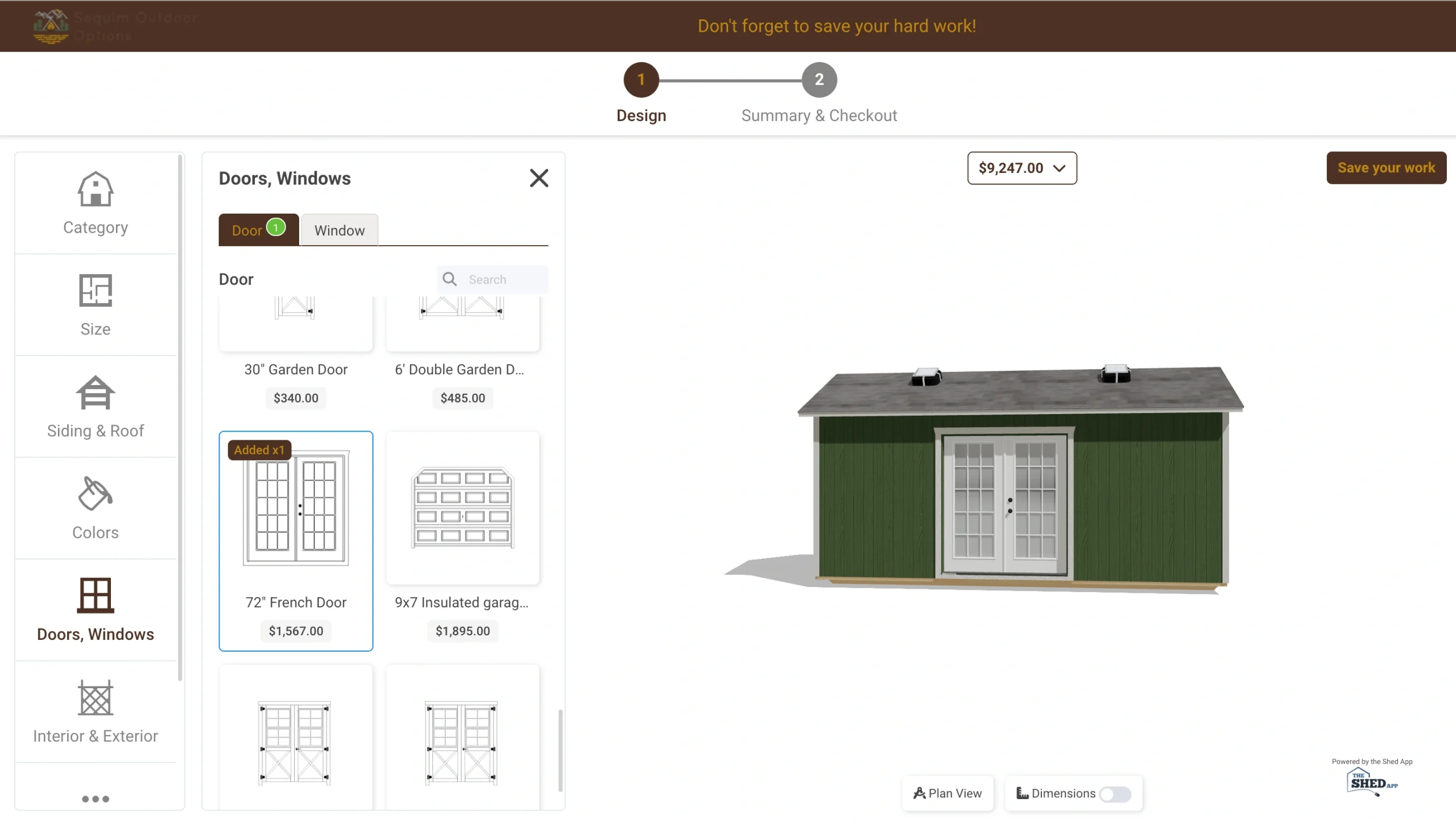
Explore Other Sheds With the 3D Builder Tool
Does your farm also need a separate place for tools, supplies, or equipment?
Use the Sequim Outdoor Options 3D Builder Tool to explore other shed styles and visualize a building for those needs. Keeping storage separate can also help you plan your animal shelter around its main purpose.
Try the 3D Builder Tool to explore and design another shed for your property.