

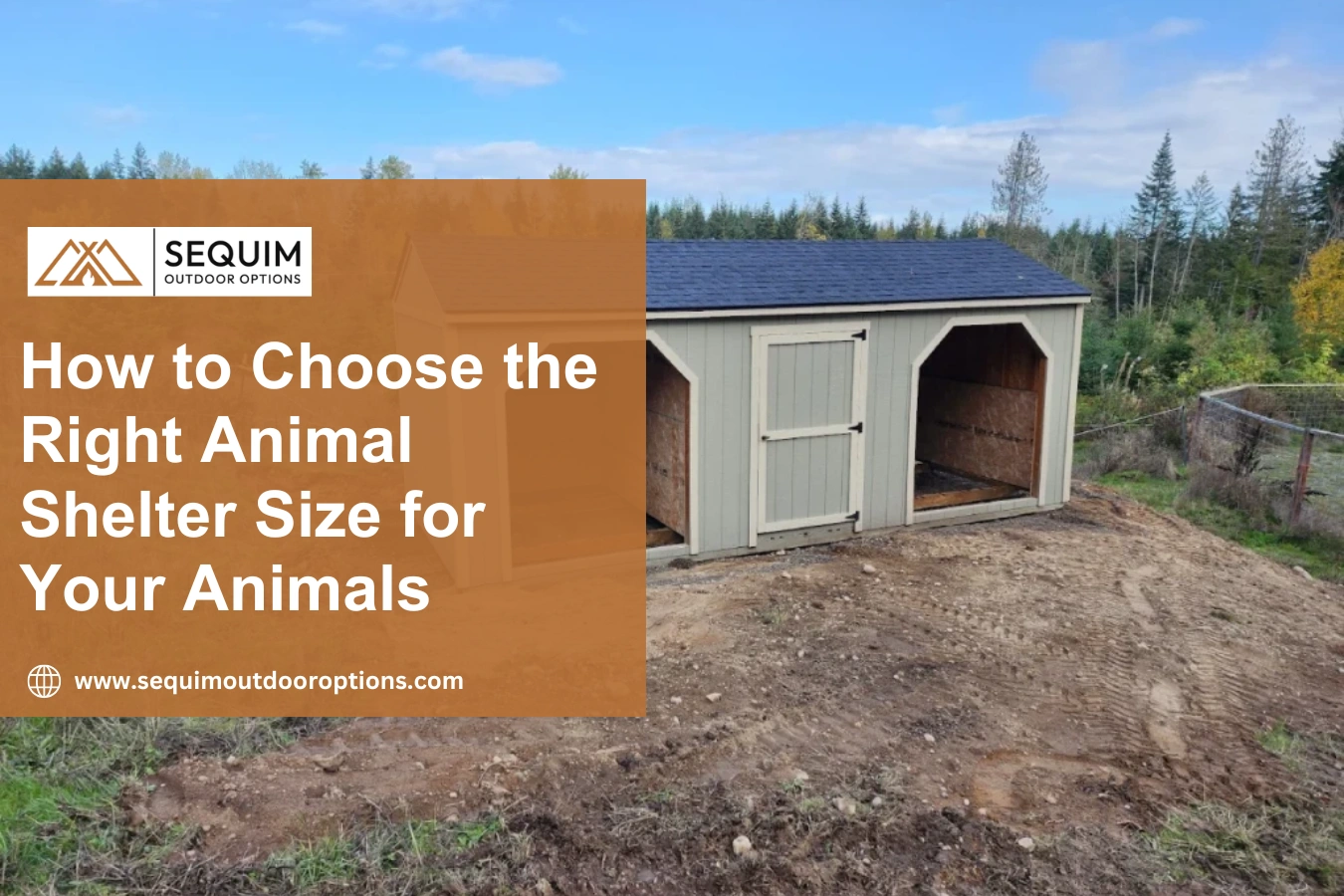
Choosing the right animal shelter size may seem simple at first, but once you really think about your animals, your space, and your long term plans, it becomes a more important decision than most people expect.
A shelter that is too small can lead to stress, overcrowding, and poor airflow. On the other hand, a shelter that is too large may not provide the warmth and protection your animals need. The goal is to find the right balance so your animals stay safe, comfortable, and healthy all year.
At Sequim Outdoor Options, animal shelters are built with real use in mind. They are open, functional, and designed to provide airflow, protection, and long lasting durability. Whether you have a small backyard setup or a larger farm, choosing the right size starts with understanding your animals and how they live.
In this guide, we will walk you through everything you need to know so you can confidently choose the right shelter size for your animals.
Why Animal Shelter Size Matters More Than You Think
Many people focus on the structure itself, but size plays a huge role in how well that structure performs.
Animals need enough space to move freely, rest comfortably, and stay protected from weather changes. If they feel cramped, it can lead to stress and even health issues. At the same time, a shelter that is too open without proper spacing can expose them to cold winds or rain.
The right size helps with:
- Proper airflow to keep animals cool and reduce moisture
- Comfortable resting space for each animal
- Protection from sun, rain, and wind
- Easier cleaning and maintenance
- Long term flexibility as your needs grow
This is why sizing is not just about fitting your animals inside. It is about creating a space that works for their daily comfort and safety.
Start with the Type of Animals You Have
Every animal has different space needs. The first step is to think about what kind of animals will use the shelter.
For example:
- Larger animals like horses or cattle need more open space to move and turn comfortably
- Medium sized animals like goats or sheep still need room but can share space more easily
- Smaller animals like chickens or ducks need less floor space but still require proper airflow and protection
Also consider how your animals behave. Some animals like to stay close together, while others prefer their own space. This will affect how much room you need inside the shelter.
Consider How Many Animals You Have Now and Later
It is easy to size a shelter based on your current number of animals. But what about future plans?
If you plan to grow your herd or add more animals, it is often better to size up now rather than replace the shelter later. A slightly larger shelter gives you flexibility without needing another investment down the line.
Ask yourself:
- Do I plan to add more animals soon?
- Will I rotate animals in and out of this space?
- Do I need room for feeding or storage inside the shelter?
Thinking ahead can save time, money, and effort later on.
Space Per Animal Guidelines to Keep in Mind
While every setup is different, there are general spacing ideas that can help guide your decision.
Here is a simple way to think about it:
- Horses: around 100 to 150 square feet per animal
- Cattle: around 80 to 120 square feet per animal
- Goats or sheep: around 15 to 25 square feet per animal
- Chickens: around 3 to 5 square feet per bird inside the shelter
These are not strict rules, but they are helpful starting points. If your animals are larger or more active, you may want to give them more space.
Always lean toward giving a little extra room if possible.
Think About Animal Shelter Layout and Use
Size is not just about total square footage. Layout also matters.
An open design, like the animal shelters from Sequim Outdoor Options, allows for better airflow and easier access for animals. This type of design works well for many setups because it provides protection without trapping heat or moisture inside.
When thinking about layout, consider:
- Entry points and how animals move in and out
- Open sides for ventilation
- Covered areas for shade and rain protection
- Space for feeding or resting
A well designed layout can make a smaller shelter feel more functional and comfortable.
Weather Conditions Should Influence Your Choice
Your local weather plays a big role in choosing the right shelter size.
In areas with strong winds or heavy rain, a slightly more enclosed space can help protect animals. In warmer climates, airflow becomes more important, so open designs with enough space are ideal.
Sequim Outdoor Options designs shelters that balance protection and airflow, which helps animals stay comfortable in changing conditions.
Think about:
- Wind direction on your property
- Sun exposure during the day
- Rain patterns and drainage
The right size and placement can improve how well your shelter performs in real conditions.
Do Not Forget About Airflow and Ventilation
Even the perfect size will not work well without proper airflow.
Animals produce heat and moisture. Without ventilation, this can build up and create an uncomfortable environment. This is especially important for enclosed or smaller shelters.
Open and functional designs allow fresh air to move through the shelter, helping to:
- Reduce heat buildup
- Keep the area dry
- Improve overall comfort
Sequim Outdoor Options focuses on this balance, making sure shelters provide protection without sacrificing airflow.
Ease of Cleaning and Maintenance
A shelter that is too small can be harder to clean. You need enough space to move around, remove waste, and maintain the area.
When choosing your size, think about:
- Can you easily access all areas of the shelter?
- Is there room to use tools or equipment for cleaning?
- Will waste build up quickly in a smaller space?
A well sized shelter makes daily care easier and keeps your animals in a healthier environment.
Placement and Property Space
Your available space also affects your decision.
Before choosing a size, take a look at your property and identify where the shelter will go. Make sure there is enough room not just for the shelter, but also for access and movement around it.
Consider:
- Ground level and drainage
- Distance from fences or other structures
- Access for delivery or installation
- Space for animals to move outside the shelter
Sequim Outdoor Options builds shelters that are easy to place and ready to work, making the setup process smoother.
Common Mistakes to Avoid When Choosing Size
Many people make similar mistakes when choosing their shelter size. Being aware of these can help you make a better decision.
Common mistakes include:
- Choosing a size based only on current needs
- Underestimating space for larger animals
- Ignoring airflow and ventilation
- Not considering future growth
- Placing the shelter in a tight or poorly drained area
Taking the time to plan properly can prevent these issues and lead to a better setup.
Why Sequim Outdoor Options Animal Shelters Stand Out
When it comes to choosing an animal shelter, quality and design matter just as much as size.
Sequim Outdoor Options offers animal shelters that are:
- Built for airflow and comfort
- Designed for real farm and backyard use
- Durable and made to handle daily wear
- Easy to place and ready to use
- Suitable for animals of all sizes
Each shelter is created with practicality in mind. The open design allows for proper ventilation while still providing strong protection from the elements.
This means your animals stay comfortable, and you get a structure that works for years.
Customize Your Shelter to Fit Your Needs
Every property and every animal setup is different. That is why customization can make a big difference.
Instead of trying to fit your needs into a standard size, you can design a shelter that works exactly for your situation.
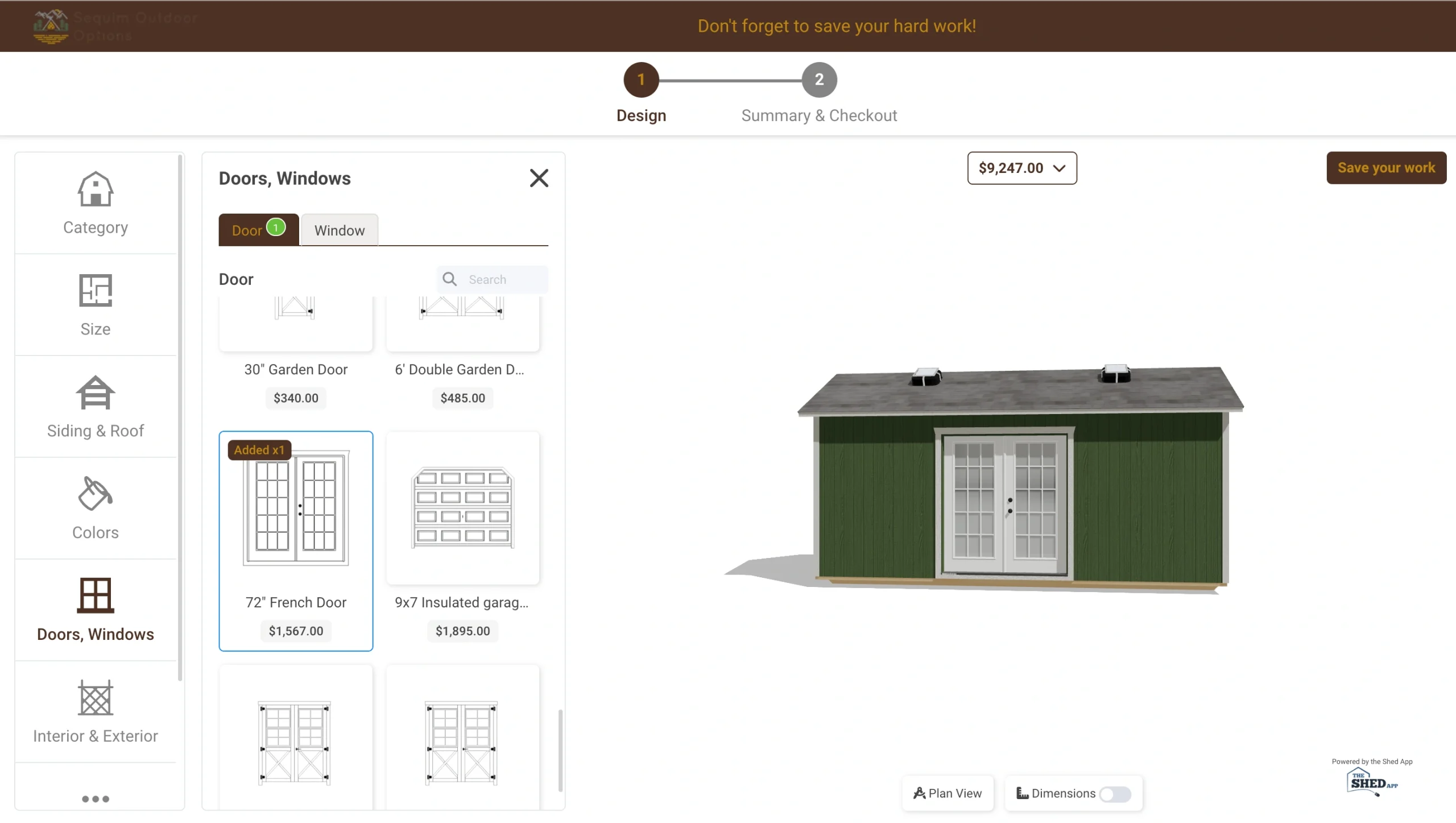
With the 3D Shed Builder Tool from Sequim Outdoor Options, you can:
- Adjust the size based on your animals
- Visualize the layout before building
- Explore different design options
- Plan a shelter that fits your space perfectly
This makes the process easier and helps you feel confident in your decision.
Final Thoughts on Choosing the Right Size
Choosing the right animal shelter size is about more than measurements. It is about understanding your animals, your space, and your long term goals.
Take the time to think about:
- The type and number of animals you have
- How much space they need to stay comfortable
- Your future plans for growth
- Your local weather and environment
- How the shelter will be used every day
When you get these details right, your shelter becomes more than just a structure. It becomes a reliable space that supports your animals and makes your daily routine easier.
Ready to Build the Right Shelter for Your Animals
If you are ready to choose the perfect shelter size, Sequim Outdoor Options is here to help.
Use our 3D Shed Builder Tool to design a shelter that fits your exact needs. You can explore sizes, layouts, and options in a simple and visual way.
If you have questions or want guidance, feel free to contact us. Our team is ready to help you create a shelter that works for your animals and your property.